


Official Selection
Life of Buda
2 hr 7 min |China
Director:
Jian Lu
Country:
China
Year:
2020
Film Duration:
2 hr 7 min
Language:
Chinese
Producer:
Jian Lu, JIe Liang
Screenwriter:
Jian Lu, Nianhua Yang, Mi Yang
DoP:
Jian Lu
Cast:
DuoJie Bu, Renqing Awang, Wangdui Zhaxi, Zhuoga Bajin, Zhuoga Suolang, Zhuocuo Wang, Pengcuo Gengdeng
Synopsis
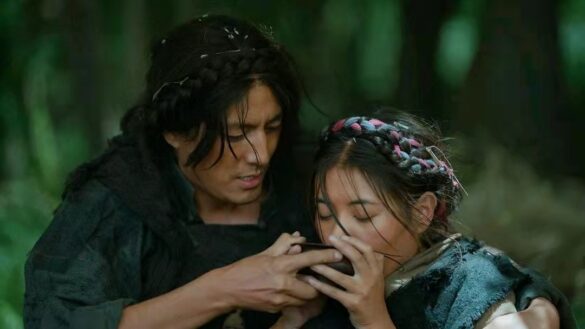
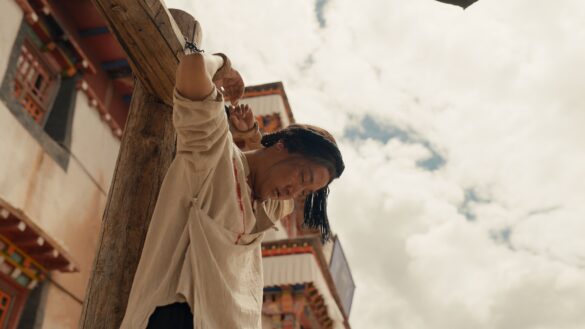
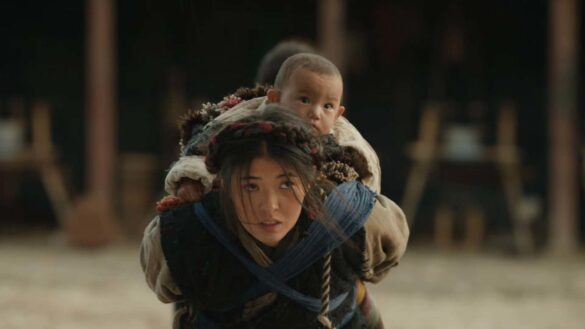
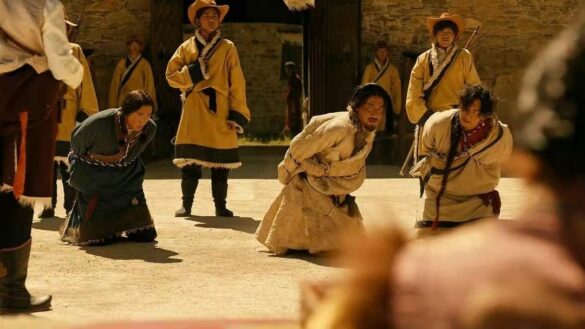
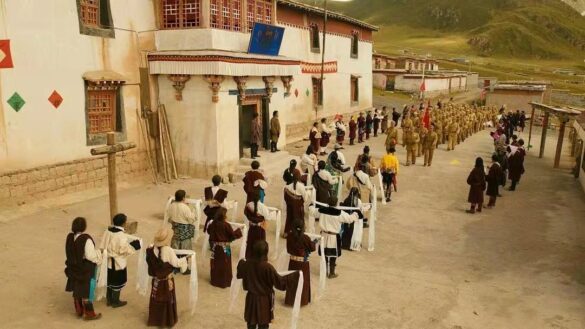
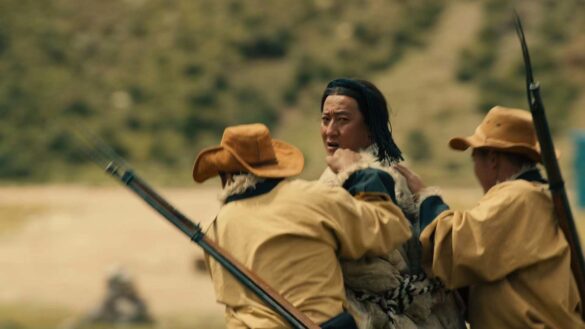
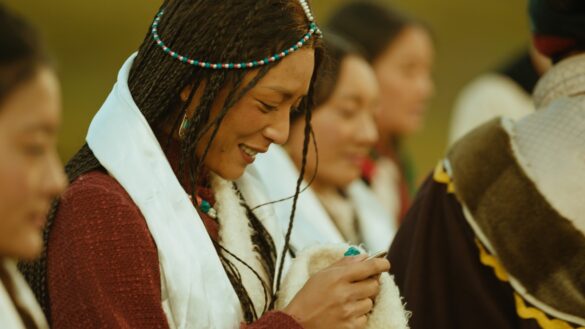
The film is based on the real story of Buda, the Grassland Hero in Tibet. Buda was born in 1932 in a serf family without seeing his father. He has been wandering around the northern Tibetan Grassland with his mother Mima for the living. On the way moving to the new master with his mother, the adult Buda met Gaba, a very kind girl who had just passed the adult ceremony. GABA felt to love him because he worked hard to make his mother live a better life. Buda was afraid to accept GABA's love because he is very poor. After the founding of new China in 1949, in order to prevent the Chinese People's Liberation Army (PLA) from entering Tibet, the local government of Tibet wantonly arrested young men everywhere to augment their army. Before captured by the Tibetan army, Buda confessed his love to Gaba. While building trenches for the Tibetan army, Bude met Bianba Dunzhu of the PLA advance reconnaissance team and fled the Tibetan army camp with Bianba Dunzhu. He got to know that the PLA entered Tibet to save the serfs. At the same time, Gaba, who was looking for Buda everywhere, married Luo Sang, who had been pursuing her, because she was told that Buda was killed by the Tibetan army. After the peaceful liberation of Tibet in 1951, Buda returned to his hometown and got know that Gaba got married. He left his hometown sadly and joined the PLA in highway construction. In 1958, a small number of upper class nobles in Tibet launched an armed rebellion to split Tibet. Buda was arrested by rebels on the way to deliver letters to the PLA. Facing the torture of the rebels, he resolutely refused to reveal the contents of the letters, and the rebels brutally dug out his eyeballs. After Buda was rescued by the PLA, Luo Sang divorced Gaba and let her return to Buda to take care of Buda. After a long separation and reunion with Gaba, Buda couldn't help feeling that PLA gave him a second life and Gaba gave him the courage to live. Buda, who was blinded but determined, devoted all his life to the cause of safeguarding the reunification of the motherland and the construction and development of Tibet til his death in 2013. Buda became a well-known legendary hero in Tibet.
Director's Statement
LIFE OF BUDA is a historical biographical feature film based on the true story of Tibet's "grassland hero" Buda. By showing his life path before and after Tibet's peaceful liberation from his birth in 1931 to his death in 2003, it not only depicts and shapes a national hero, but also comprehensively shows the historical changes of Tibet's social and political system spanning thousands of years. How to mold a real prototype character into a credible artistic character on the screen is the key to the success or failure of the film. Due to the special regional nature of this film, the actor of Buda is preferred to Tibetan actors, and all the Tibetan and Han characters in the film are starred by Tibetan and Han actors respectively; The dialogues of the film are in Tibetan and Chinese respectively according to the living environment and communication objects, so as to dilute the traces of actors' performance and give people a life-oriented feeling. How to artistically show the correlation between a person's life and a nation's liberation history in the limited time and space of a film is the first concern in the creation of the film. The production design, the custom, make-up and prop must respect history and restore life in this period in Tibet. At the same time, the tone of the film should take the historical node of Tibet's peaceful liberation in 1951 as a dividing line, and deal with fading and restoration respectively, so as to strengthen the comparison between old and new Tibet in terms of visual and psychological feelings. In order to enhance the viewability and artistry of the film, we mobilized all audio-visual means to skillfully integrate Tibet's unique natural scenery and folk culture into the story and plots. The soundtrack of the film is artistically treated with the international trend on the basis of retaining the characteristics of Tibetan national music. As the first film shot in the grassland of northern Tibet with an average altitude of about 4500 meters, the filming met numerous hardships and challenges, but it gives an unforgettable experience for everyone involved.


Director
Our Partners


Contacts

[email protected]

+977-9801131383
+977-9851031383

Rehdon Bridge, Samakhusi
Kathmandu-26
Powered by Soft Crunch Pvt. Ltd.


