


Official Selection
International Shorts
The Riyalists
1 hour 9 minutes|Nepal
Director:
Kesang Tsetan
Country:
Nepal
Film Duration:
1 hour 9 minutes
Language:
Nepali
Producer:
Shunyata film
Screenwriter:
Kesang Tseten
Synopsis
The wealth and opulence of the Gulf States in the Middle East were built on the labor of cheap labor from foreign countries. In 2009, four young Nepali men left their villages for the Arab Gulf; their stories, like those of a few million that keep the country afloat, often disillusioning and, as often, empowering, captured in the film In Search of the Riyal. The Riyalists trace the trajectories of the four men since then and over 12 years, a chronicle of Nepali labor migration, illuminating the experiences of up to 3 million Nepalis working in Qatar (2022 Fifa World Cup venue), UAE and other Gulf States, the last few decades.
Director's Statement
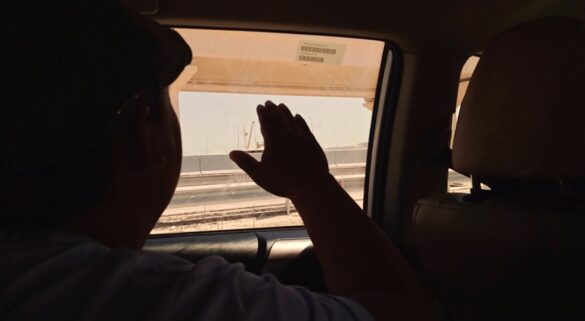
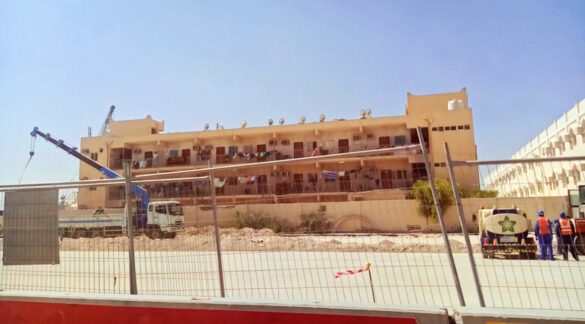
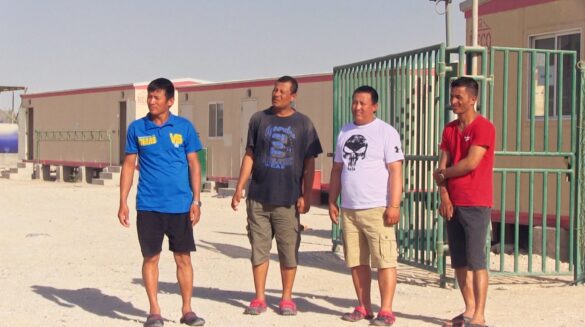
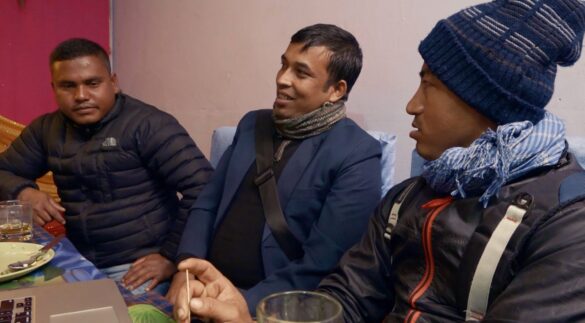
The Ryalists reconnects to the film In Search of the Riyal, which I made in 2009 and focused on four young Nepali males from disadvantaged communities in Nepal who were bound for the Gulf. They were in their late teens, two of them Dalit, who met during basic training in scaffolding. The film depicted the experience of many Nepalis' often disillusioning and, sometimes, empowering experience in the Gulf, rarely captured then, a time before smartphones. More than a decade later, I picked up the trail of the four main subjects of my earlier film to see where and what their lives had come to. Over a decade, the four trajectories represent a chronicle about young Nepalis. Up to 2.5 million Nepali men, or more than half of all men between 18 and 40, work abroad. The remittances, equalling 30 percent of GDP, from mostly menial labor that keep the country afloat and profoundly affect the social fabric. Prem went to Qatar, where the conditions of work were difficult, though, as Prem declares, he was a good worker, even named 'worker of the month' once. His family conditions, a mentally unstable father, forced his return to Nepal early in the migration cycle. He took up his caste (Dalit, the lowest caste) trade of silver smithery, setting up shop in the village center. He can support his aging parents and feed and educate his three children, but savings are impossible. This worries him and his wife; consequently, he contemplates going abroad again, so many years later. His parents want him, an only child, to stay home to look after them. Bhoj landed in Dubai and was deported for participating in a strike, even though he was merely following others. Subsequently, he went abroad again, to Qatar, to a good job. A good job then, which applies today, meant a monthly salary of USD250 with overtime, paid promptly. But Bhoj's wife became gravely ill, and he was forced to return home. He took up his caste profession of tailoring, which Hindu society considers 'untouchable.' Then, his brother, who ran a business in livestock (pigs), died in a freak accident. Since it was a lucrative business, Bhoj took over. Three days a week, he and his partner comb villages for baby pigs, which they sell at the famous Dharan pig market. As he puts it, people like him, who are disciplined, can succeed as entrepreneurs in Nepal; it is, according to him, the erratic individuals who need a strict regime of working conditions that are found abroad. Dhanvir has been with the same British construction company he started in 2009. In the earlier film, he appears happy-go-lucky as he shows off his workplace, donning his yellow scaffolding attire. He recounts his ambition had been to make one lakh rupees (approx USD1000), then two, then three. A decade later, we meet him in his labor camp in the desert, where he commutes daily to his worksite at the Doha metro extension. As a foreman, he earns nearly a thousand US dollars monthly, five times what he earned a decade ago. We meet him on a home visit in the hill town of Dhankuta in Eastern Nepal. His 11-year-old was an infant in a cradle swinging to and fro in the old film. His single regret: not having held his child enough as he grew up, and yet, he must continue going abroad. Nabin has worked in the UAE ever since 2008. At that time, he was newlywed. But his first wife had eloped with someone, leaving behind their two twin daughters. Nabin remarried. He shares a mutual affection with his present wife, a school teacher. Despite his initial marital travails, his is a love story. Like Dhanvir, Nabin had worked himself to a foreman's position, earning a thousand US dollars monthly. He has begun building a concrete house in his village; his twins are growing up and well taken care of by their stepmother. Nabin has the air of confidence of a successful labor migrant.While they cannot be taken as 'representative,' the five trajectories offer a longitudinal glimpse of rarely documented lives over 11 years. Where the earlier film showed numerous situations of migrant workers, the focus of this film is personal. There have been a lot of headlines about the exploitative working conditions in the Gulf, but little is known about the effect of migration on emotional health and families. In 2008, migration offered these young men a dream. They left their newlywed wives, their infants in their cradles, and their lives as members of marginalized communities for escape and transformation. We now have a semblance of how it had all gone for them. Securing permission to film in the UAE or Qatar is nearly impossible, and filming without permission is risky. Many detractors have been caught and locked up. Hence, it was only possible to meet and film Nabin at the Abu Dhabi airport and then, weeks later, at his village in east Nepal. Filming Dhanvir in Qatar was easier, but only with a small handicam and an iPhone. The conditions and experience of Nepali migrant workers apply to millions of Asians and Africans on a similar trajectory. At a time when the world's attention is on political migrants and refugees, it is a reminder that economic reasons, as well as the curiosity to see what's on the other side of the hill, compelling reasons why migration persists.


Director
Our Partners


Contacts

[email protected]

+977-9801131383
+977-9851031383

Rehdon Bridge, Samakhusi
Kathmandu-26
Powered by Soft Crunch Pvt. Ltd.


