


Official Selection
NIFF DOCS
THE SLEEP OF THE ANCESTORS
|Turkey
Director:
Seyid Çolak
Country:
Turkey
Language:
Turkish
Screenwriter:
Güven Adıgüzel
Synopsis
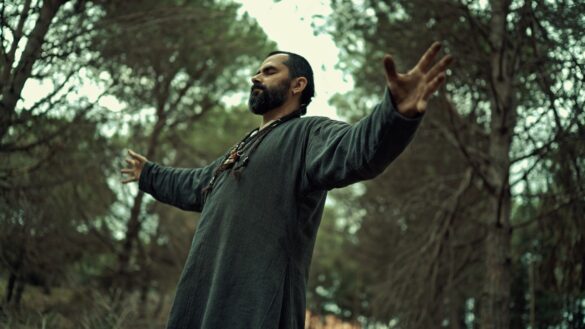
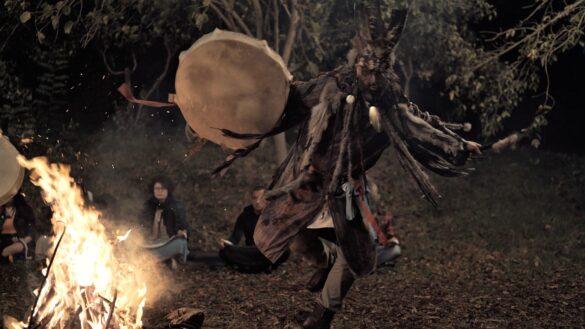
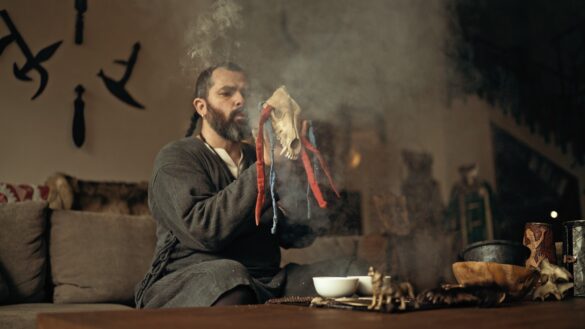
The film accompanies the annual ceremony of The Autumn Kamlanie on October 21st, organized by a group of Shamans who live in Turkey as a minority, and the preparation process and what happens during the ceremony. It observes the journey and the transformation of Akagu Cenk Sertdemir, who has become a Kham (Shaman) after training for years in Siberia.
Director's Statement
The documentary The Sleep of The Ancestors is actually an exploration project. I can say that I have picked up very divergent and archaic knowledge at every step of this project. Each project becomes a new school for me. This was also one of them. Along with the relationship we form with nature, our irresponsibility, and making nature more and more inhabitable, I sought the answer to a lot of questions. I met the archaic Shaman culture after following why we, who need to be a part of nature, behave like "masters" with the claim of "supreme being." The fact that the Shaman-Kam tradition acts as a cultural bridge that includes the love of nature, a state of transcendent ecstasy, the sublimity of the spirit, the continuity of the good-evil war within man, and the respect for all living things, prompted me to investigate. I first met Asu Mansur, and after that, I met Akagu Cenk Sertdemir. After meeting with both of them and saying I wanted to observe the ritual of the Autumn Kamlanie that was about to begin, they both welcomed it. I carried out the project by being sensitive to this ancient culture they tried to maintain at every project stage. Although Shamanism is a term that refers to the religious ceremonies of Siberian tribes, it is not a commonly understood-adopted concept as a religion or followers of that religion. In other words, Shamanism is not a religion but a universe of culture. The subject of the project is the effort to understand the ancient rituals infiltrating this cultural universe and the Shaman-Kam tradition, which actually means a long subconscious for us. Shamanism, which has spread to a very wide geography in the world, also has an important place in our culture. Most of the time, even without being aware of it, we continue to carry this culture that we have carried in our genetic codes for thousands of years in our daily life practices. Some traditions still live in Anatolia that are rooted in Shamanism, such as the evil eye bead, the carpet patterns, mourning ceremonies, traditions of birth and death, procedures of pouring lead, lifting your palate with your thumb in case of sudden fright, knocking three times on a wood when mentioning something bad, biting your tongue when mentioning something good, pouring water after a guest, welcoming the spring, and saying goodbye to autumn. The documentary project focusing on the ceremony that signifies a moment of silence for the ancestors before the world goes to sleep, which is known to very few people in Turkey, tries to find the answer to what the Shaman-Kam tradition corresponds to today. Seeing the answer, of course, through the daily life practices of people who have adopted, assimilated, and valued this culture. Through the rituals of a culture that has been going on for centuries, it progresses by delving into the questions of "Does the Shaman-Kham tradition have anything to say to the world today, does this culture contain only a folkloric meaning as a nostalgic element, and how does the Shaman-Kam tradition view the troubles and problems of the modern life we live today?".


Director
Our Partners


Contacts

[email protected]

+977-9801131383
+977-9851031383

Rehdon Bridge, Samakhusi
Kathmandu-26
Powered by Soft Crunch Pvt. Ltd.


